








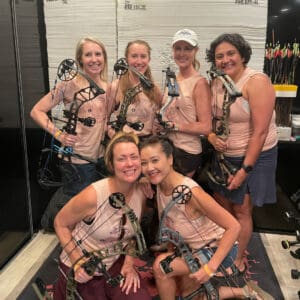


What comes to mind when you think about competition shooting? For some who are unacquainted with the shooting sports, competition shooting conjures images of experts shooters and only those with super shooting skills can participate. This is furthest from the truth you can get. Shooters of all ages, experiences and skills compete every day of the week throughout the country. Think about recreational softball leagues. There are divisions for all skills so people compete against their peers. The same is true with shooting competitions. The difference is you can shoot with whomever you like and just have scores tallied by class (skill level) and divisions (gun and gear).
Who can participate?
The short answer is: Anyone! If you can shoot your gun safely and understand safety rules, then you are ready. While the shooting sport organizations may not have a minimum age, your local range might require kids to be a certain age to compete and might require parents to be present. What it boils down to is if 10-year-olds can go out and shoot a match, so can you!
As far as skill, if you can hit a paper plate at 7 yards, that is an excellent start. There are even accommodations for handicaps. Call the range ahead of shooting if you have specific questions to your needs. Don’t worry about being good enough. Everyone out there was a new shooter at one time. Get out and have fun!
What do I need to compete?
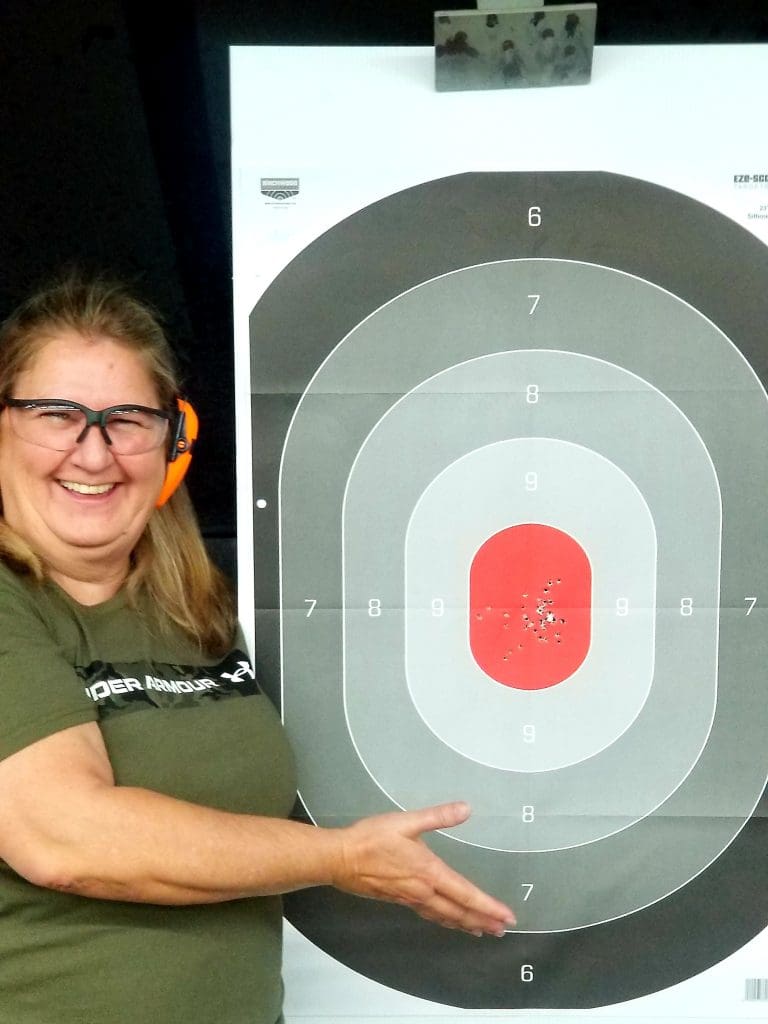
There are several types of shooting sports for shotgun, rifles, and pistols. You can even find shooting competitions for muzzleloaders! As for what gun and what gear to start competing, jump in with you have. Whatever gun you own, start with that. You will find a division that fits your gun and gear with no added expense to start. As you shoot matches, you will get a greater understanding of gear and guns and be able to see what you really need. Here is a short list of gear to take to your first match.
- Kydex Outside the Waistband (OWB) Holster
- Magazines (3-4 or more depending on your sport)
- Magazine pouches (preferably kydex)
- Sturdy belt
- Gun in good working condition
- Ammo that runs well in your gun
- Eye and Ear protection (electronic ear protection is great for range commands)
- Range Bag
- Water, sunscreen and other range comfort items.
When am I ready?
To be more comfortable with what is expected during a match, watch some videos of competitors on YouTube or Instagram or try to see a match in person and ask questions. While the skills on those videos are amazing to watch, it is okay if you aren’t the fastest shooter out there. Remember, those competitors have been doing this for several years, but they too started out as a new shooter once. Most of them are happy to answer questions and help when you see them on the range.
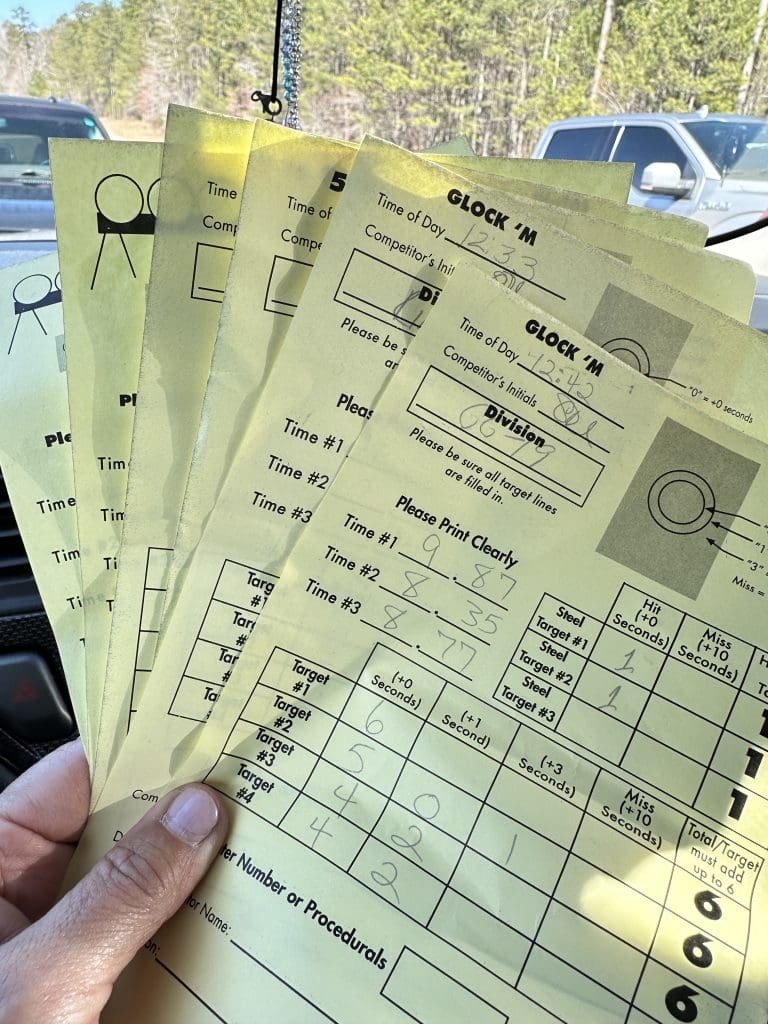
If you wait to compete until you are good enough, chances are you won’t step out and do it. If you are nervous, that is perfectly fine. Even the grand masters get nervous from time to time.
Here are a few basic skills to have before you step into a match:
- Be able to draw from a holster safely
- Reload safely
- Move with a gun in your hand safely (walking is perfectly fine.)
Note that nowhere is speed listed as a requirement to shoot a match. Anytime you step on the range, safety is your first priority. If you can do the above while following the 4 safety rules, you are ready to shoot a match. Speed will come with repetitions. The more you shoot competitions, the faster you will get at those skills. Do not let slow keep you from trying.
Where can I compete?
The first place to look for competitions is your local range. That is where all the shooters are and if they do not have any shooting matches there, they will know the closest place that hosts them. In addition to local ranges, you can try the following national organizations for your nearest club.
- Amateur Trapshooting Association (Shotgun)
- Civilian Marksmanship Program
- International Defensive Pistol Association (Pistol and PCC)
- National Muzzle Loading Rifle Association
- National Skeet Shooting Association (Shotgun)
- National Sporting Clays Association (Shotgun)
- Single Action Shooting Society (Pistol and PCC)
- United States Practical Shooting Association (Pistol and PCC)
Youth Specific Organizations
- AIM – Academics, Integrity, Marksmanship
- National 4-H Shooting Sports Foundation
- Scholastic Clay Target Program
- Scholastic Steel Challenge
Why should I compete?
Other than the fact shooting sports are a whole lot of fun, competing with your firearm increases your efficiency and accuracy and helps with confidence and control. If you want to get better at anything, you must repeat the movement. Shooting competitions allows you to gain several repetitions on drawing from the holster, lining up sights to your target, and shooting under pressure. It helps you become accurate quickly.
Even if you have your firearm for personal protection, competition can induce stress through timed events. Getting accurate hits while under pressure is something all of us can practice and gain insights
The first match—safety, safety, safety.
Now that you made the decision to shoot your first match, there are a few extra rules to abide by. Running (or at the least, moving) with a firearm can pose a few extra challenges when it comes to safety. The four fundamentals of firearm safety don’t change or leave. We always follow those. But there are a few more layers of protection for the shooter and spectators.
The Safe Area
The first question you might have when arriving to a match is where do I put on my gear? Holster, belt and magazine pouches can be put on anywhere. Likewise, loading magazines can be done at any time. The control is with the gun. Once you arrive, the gun should be in a case. Take the case to a designated “safe area”. There should be signs above a table and they will be close to the shooting bays. Usually, ranges will have several at a match, typically between the bays or just inside of them. No ammunition is allowed at the safe area.
It is this safe area that you will uncase the gun, ensure there is no ammunition in the gun, and holster. During the match, if you need to look at your gun for any reason or remove it from the holster, you will do so at these designated safe areas. Some shooters will dry fire, oil guns, check their gun’s function or even remove their firearm to fix a holster issue like loose screws.
When in doubt, ask. Any participant will be helpful in pointing out the safe area. They know every competitor must use it!
The 180
Shooting at competition will require movement. As stated earlier, the four firearm safety rules apply, including “keep your muzzle pointed in a safe direction”. Spectators are not in a safe direction. This brings us to the 180 rule. If you stand in a shooting bay facing down-range (where the berm is) and stick your arms to the side, they create 180 degrees. You may NOT point the gun past the 180, up-range (toward the spectators). As long as the gun is pointed down-range, you are pointing in a safe direction. The 180 moves with you.
As you complete a course of fire, you may be moving down range, engaging targets as you go. Moving is not an issue. Where you point the gun matters. Earlier, it was mentioned that control is with the gun. No matter where your body is, if the gun is pointed down range, you are okay. If your body remains facing down range and the gun points past your 180, up-range, even if just a little and not at any person, you will be stopped by the Range Officer (RO) and Disqualified (DQ) from the rest of the match. Safety is taken very seriously.
Range etiquette
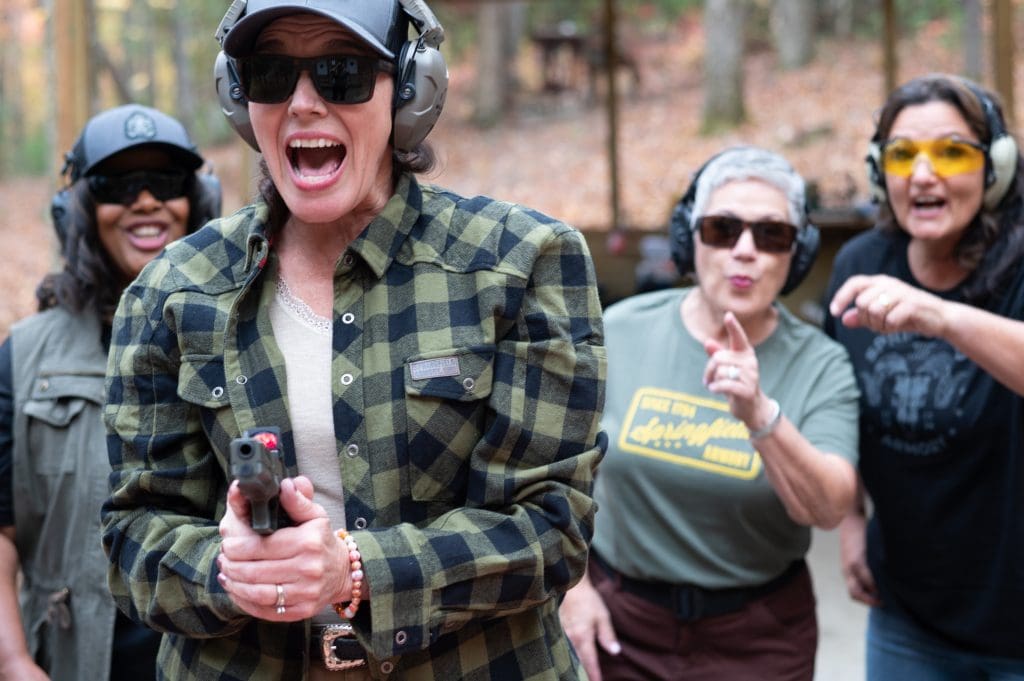
In addition to safety, there are a few range etiquette considerations. Before each stage, there will be a stage brief and walk through. The stage brief gives the directions for the stage and then typically four to five minute to walk a stage and see the shooting positions. Some matches, like USPSA will allow you to walk stages before the match too. Others, like IDPA, only allow you to walk the stage after the stage brief. During the walkthrough, everyone takes turns. Be sure not to linger in a spot too long or cut in the line. Your squad mates will appreciate it.
When others are shooting, keeping talking to a minimum is a good idea. Loud voices can be distracting. That can also include not talking to someone who is the next or ‘on deck’ shooter as they are getting their last minute mental preparation. If someone isn’t shooting, getting ready to shoot or on deck to shoot, feel free to ask them questions.
In all matches, from local to national levels, competitors must reset stages in between shooters. This includes taping or pasting the holes in targets, resetting steel targets and resetting moving targets, if they are there. It is quite frustrating when a competitor never resets a stage.
Each range and shooting match will have their own little nuances. When in doubt, ask questions. The RO and other competitors will be glad to help you through your first match. We have all been there and understand. We want YOU to have fun and enjoy your firearms.