




















Glock Shooting Sports Foundation (GSSF) shooting matches are a great starting point for anyone interested in pistol competition. There’s a place for everyone, from beginners to the more experienced shooters. It was February 4, 2023, when I walked into my first Glock Shooting Sports Match. I was a little unsure of what to expect, but their website is full of information on the rules, guidelines, and regulations for the matches. There are many divisions to choose from on their website during registration, and you must select one that allows your firearm. You can also choose as many divisions as you want.
Lesson #1: Follow Recommendations of GSSF Staff
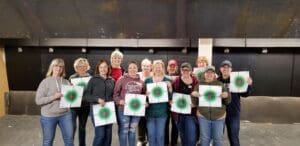
As beginners to GSSF matches, I talked with a few girlfriends, and we decided we were ready to try our hand at GSSF competition. I signed up for two divisions, Glock Girls and Competition. On match day, we drove to the local match, signed in at the registration table, picked up our labels, and filled out the waivers. (The labels have your name and what you’re registered for.) We then headed to the stations, but we didn’t fully understand the stage sign-in procedure, so we asked around and got a couple of answers from other attendees. GSSF recommends that you go to every station and sign in at the three different stations, 5 to Glock, Glock ‘M, and Glock the Plates, and when you’re ready to shoot the first stage, you mark that you’ve arrived and are ready. Well, we didn’t do that. We followed another attendee’s suggestion and signed in to the first stage, stayed to shoot, went to the next stage, signed in, stayed to shoot, and did the final stage the same way. We waited an extremely long time at each stage, doing so because those who had previously signed in had priority. We should have done it the GSSF-recommended way. First lesson learned.
Lesson #2: Preparation is Key
The next lesson was preparation for shooting. When we arrived at our first station and marked, we were given score sheets to place our labels on, which we then gave to the volunteers to add to the “tree.” As shooters moved up and completed their shooting, we were then called to be placed “in the hole” (3rd to go), “on deck” (next up), and then “up” (ready to shoot). When you are called “in the hole”, you should have your magazines ready to go. It takes extra time to reload while shooting the strings, so have enough magazines preloaded and ready to go. Having friends did help, though, as we loaded each other’s magazines as we went. But if you’re alone, extra mags would be better.
Lesson #3: RSO’s are Ready & Willing to Assist
When it was my turn to shoot, the Range Safety Officers were very helpful in guiding me every step of the way. They made sure I understood the string (course of fire), the firearm was in the correct position to begin, and asked if I was ready. When the buzzer started, I felt very confident in my shooting and did quite well. After the course of fire, I cleared the firearm, bagged it, and the Range Safety Officer and I, along with other volunteers, went down to score and paste up the targets for the next shooter.
After I completed the three stations, I turned in my score sheets for tallying at the end of the day. Overall, it was a great experience. We saw a few familiar faces and met lots of new people, and everyone made it an enjoyable experience. Everyone is especially helpful when you’re a new shooter or new to competition. We left to go home and couldn’t wait to see the final scores. I was so excited to see that I placed 13th overall in Glock Girls and 60th in the Competition Division. Not bad for my first time, and it made me eager to sign up for other GSSF matches when I’m available. My scores over the past two years have improved, and I can’t wait to do more.