















People definitely have opinions about it. The common discussion of “stopping power” often comes up. When it comes to what firearm is best for you, caliber is certainly a consideration, but there are better questions to ask.
Understanding the Purpose of Defensive Ammo
First, let’s explore the purpose of defensive ammo. A large, heavy bullet that expands and penetrates is effective, but it does come with compromises. A larger caliber will recoil more. How much ammo a pistol can hold (capacity) can also be limited. This is significant, especially when carrying a firearm concealed. With .380 and 9mm, because both cartridges are the same bullet diameter, capacity isn’t an issue, but potential power is.
The Ballistic Differences Between .380 and 9mm
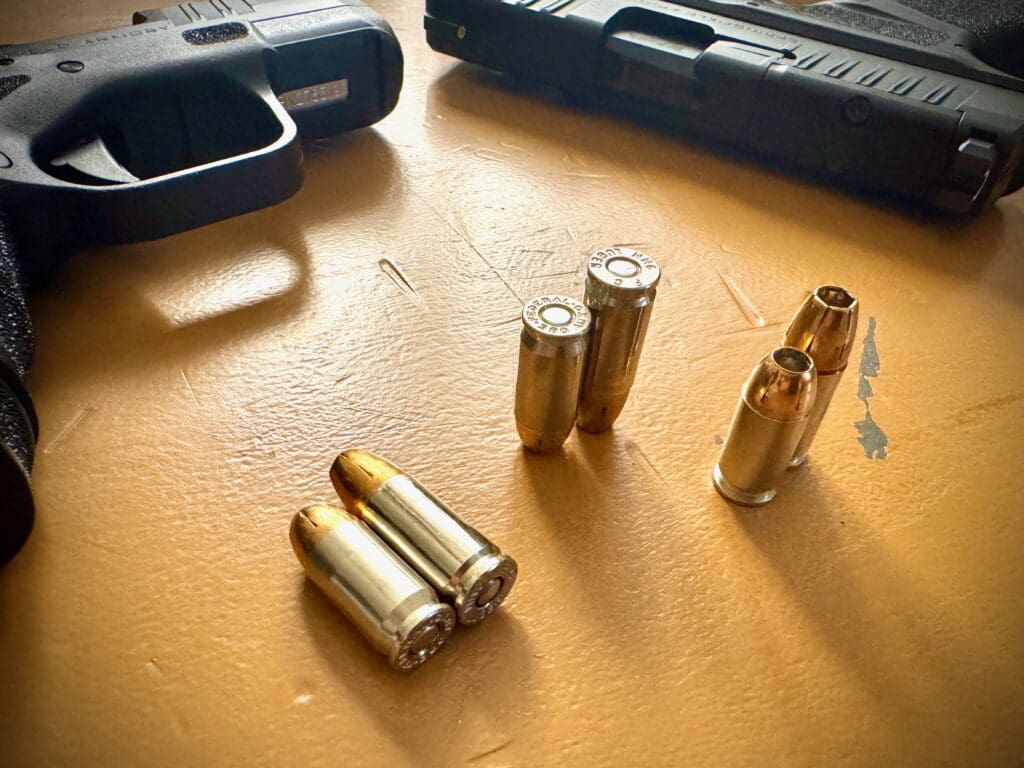
Ballistically speaking, it’s important to understand the difference between .380 and 9mm. Both use projectiles with the same bullet diameter, .355 inches. What’s different is the case length. 9mm (.754 inches) is longer than .380 (.68 inches). .380’s shorter case means there’s less capacity inside for propellant (gunpowder). Less propellant means a decrease in the potential pressure that can build inside the case and less power to push the bullet out of the barrel. It results in softer feeling recoil.
Firearm Size and Design Matter
Beyond the ammunition, it’s also important to look at firearm size and design. Most pistols in .380 are small. Known as micro-compacts, they are often very slim with short barrels. For serious users, this size is often used as a backup gun, a second firearm carried on the body in a pocket or ankle. These tiny pistols are often appealing to women because it is so much easier to conceal such a small firearm on the body or in a bag. There can be some significant downsides to using them as your primary or only firearm.
Difference in Shooting a .380 or 9mm
Tiny .380 pistols are often difficult to shoot well. Even accomplished shooters find shooting the smallest micro pistols more challenging. Short, super slim grips make them hard to hold on to. Mini controls like the magazine release button and slide release lever can be awkward to access and manipulate. Short barrels with hard-to-read sights make it difficult to aim and shoot accurately and quickly. Lightweight pistols often recoil more, making it challenging to maintain a good grip. Some .380 pistols with defensive loads feel just as snappy as 9mm or worse.
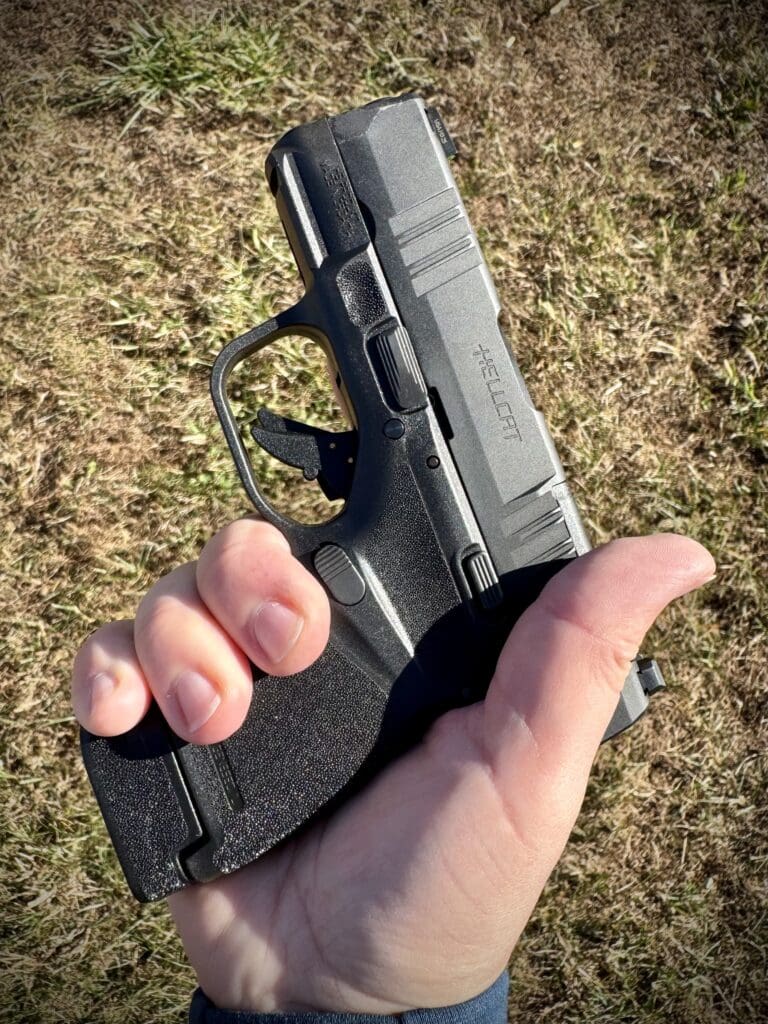
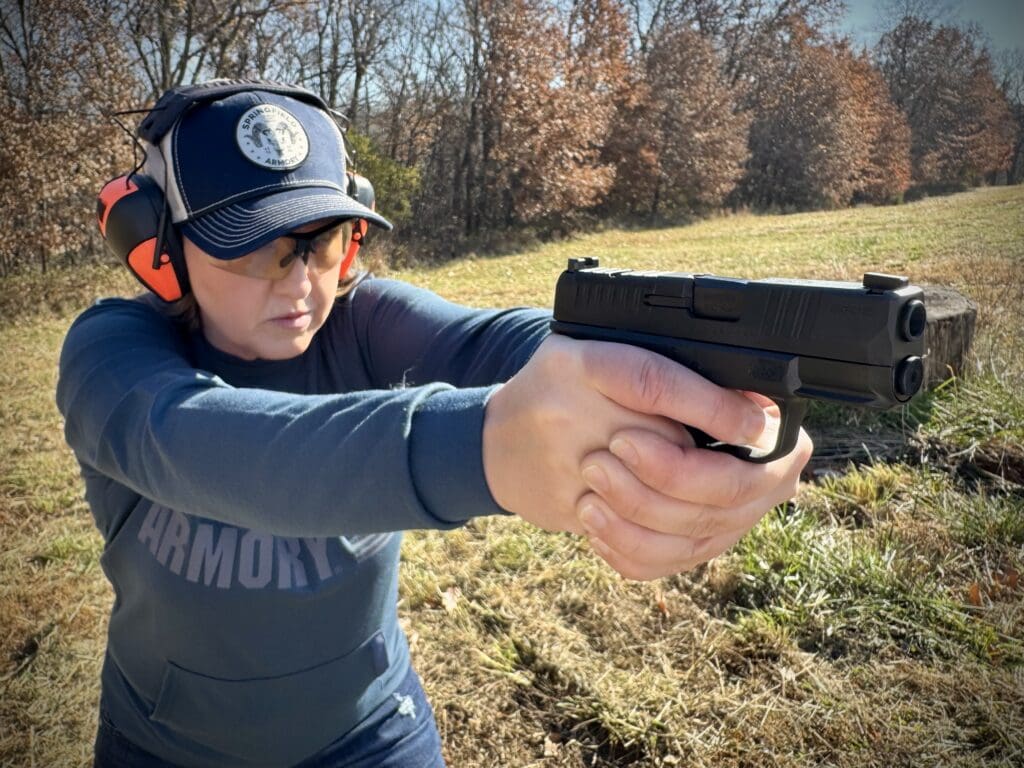
Pistols chambered in .380 that are a little larger and heavier immediately become much easier to shoot. It’s in these pistols that you can compare apples to apples, that is, a specific model offered in either .380 or 9mm. An example of this is the Springfield Armory Hellcat that comes in both calibers. The features remain the same, like the ability to add an optic, use a flush-fit or extended magazine, and the capacity. The difference is in the recoil.
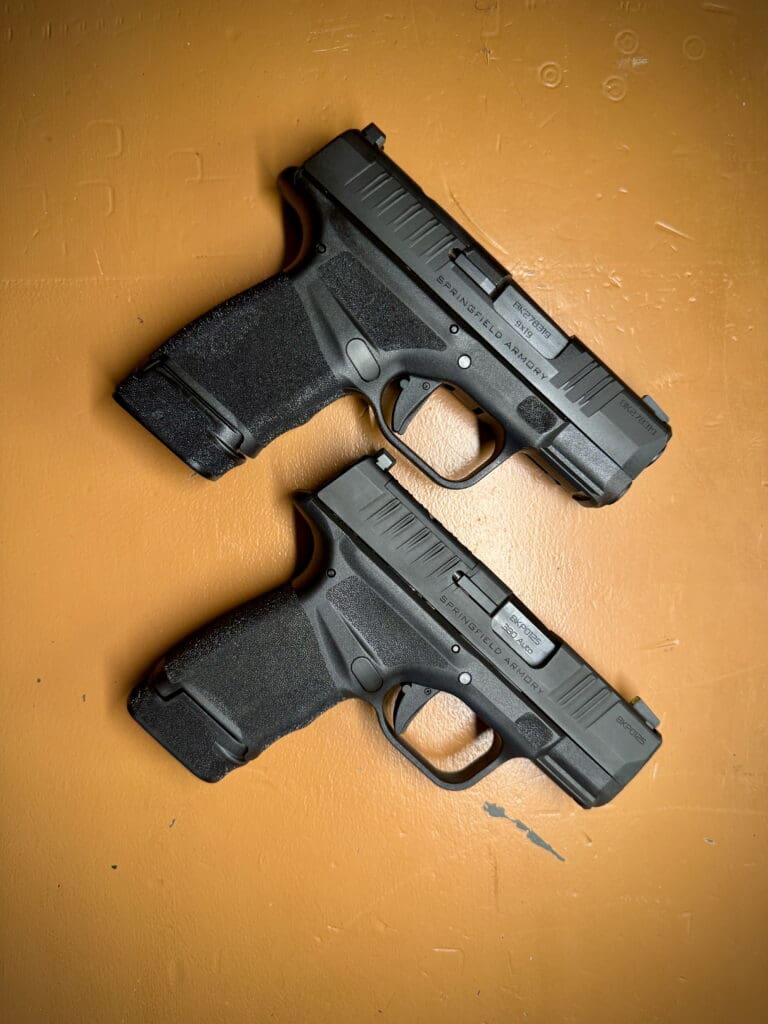
9mm typically has snappy recoil and can feel more violent because of how quickly the end of the barrel jumps up and settles back down. Comparing a 9mm out of the same firearm chambered in .380, with .380, the recoil has more of a push than a snap. The end of the muzzle doesn’t rise as high compared to the 9mm’s. It’s even more noticeable with loads designed for protection. Training or “target” ammo is much more economical and most often recoils less, though there are some training loads that are designed to feel the same as defensive ammo. Most of your practice will be with softer training ammo, but you should also train with your defensive ammo.
The Better Questions to Ask in Deciding Between .380 and 9mm
Coming full circle, instead of the original question, which caliber is better, think about these questions instead:
- What is the goal of the firearm? There’s no right or wrong answer here. If the goal is to learn how to shoot and enjoy the process, that can be different than choosing a firearm for protection. If your main interest is simply to learn to shoot a centerfire handgun and you struggle with controlling recoil, then .380 can be a great choice. Just keep in mind that .380 ammunition has fewer available load options and is most often more expensive.
- Do you plan to use the firearm for defense? Choosing a firearm in .380 is a compromise when it comes to ballistic performance. Reputable ammunition brands use ballistic testing through gel and with barriers to determine how effective loads are in how they expand and penetrate. .380 just doesn’t perform as well as 9mm. That said, loads like Federal’s HST in .380, even when fired through heavy clothing, the projectile penetrates between 10 and 12 inches in gel. .380 underperforms 9mm, but not by that much.
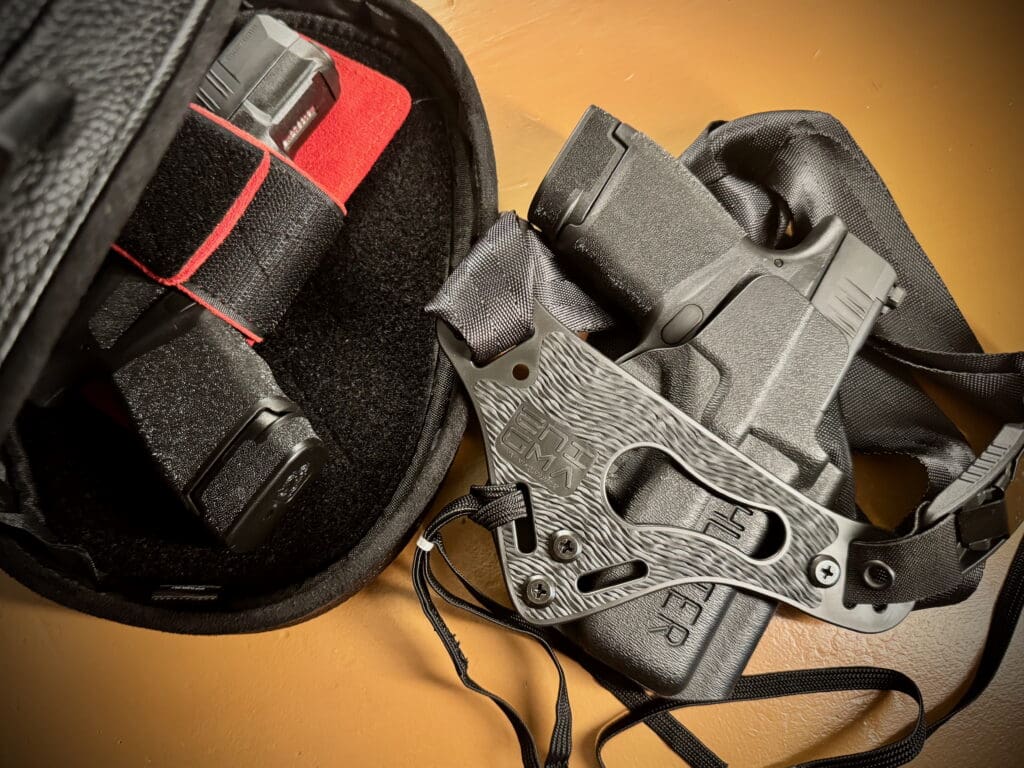
- Do you plan to carry your firearm concealed, with size being the priority? If you’re searching for the smallest firearm to minimize changes in your wardrobe, then you’re likely considering the smallest of micro-compacts. In many cases, these tiny pistols only come in .380. Keep in mind that your ability to align small sights, get a good grip on a slim, short grip, and access all the controls will be more challenging, especially under stress.
Another Important Question – How Well Can I Shoot a .380 or 9mm
How well can you shoot either caliber? This is often the most overlooked consideration when it comes to choosing the right firearm. Only you know how much time and effort you’ll be able to invest in learning how to shoot. How often you’ll go to the range, practice gun handling skills at home in dry fire, and how much you’ll spend on ammunition is all personal. When it comes to shooting ability, it’s helpful to visit a range that offers rental guns to try different firearms in both calibers. Results on target matter. If you struggle hitting inside 10 inches of the center of a target at 5 yards with 9mm, you’re likely anticipating recoil or “flinching.” Try .380 and see if your results improve.
Many women struggle with flinch, the automatic physical reaction to noise and recoil. For some women, it’s very difficult to overcome it, and that’s what makes .380 more appealing. There are ways you can reduce that anticipation of recoil and train through it. You can shoot outdoors where sound doesn’t bounce off the walls. You can double up on hearing protection by wearing both earplugs and earmuffs. You can learn the fundamentals of shooting with a .22 caliber firearm and move up to a full-size 9mm with target loads as you improve.
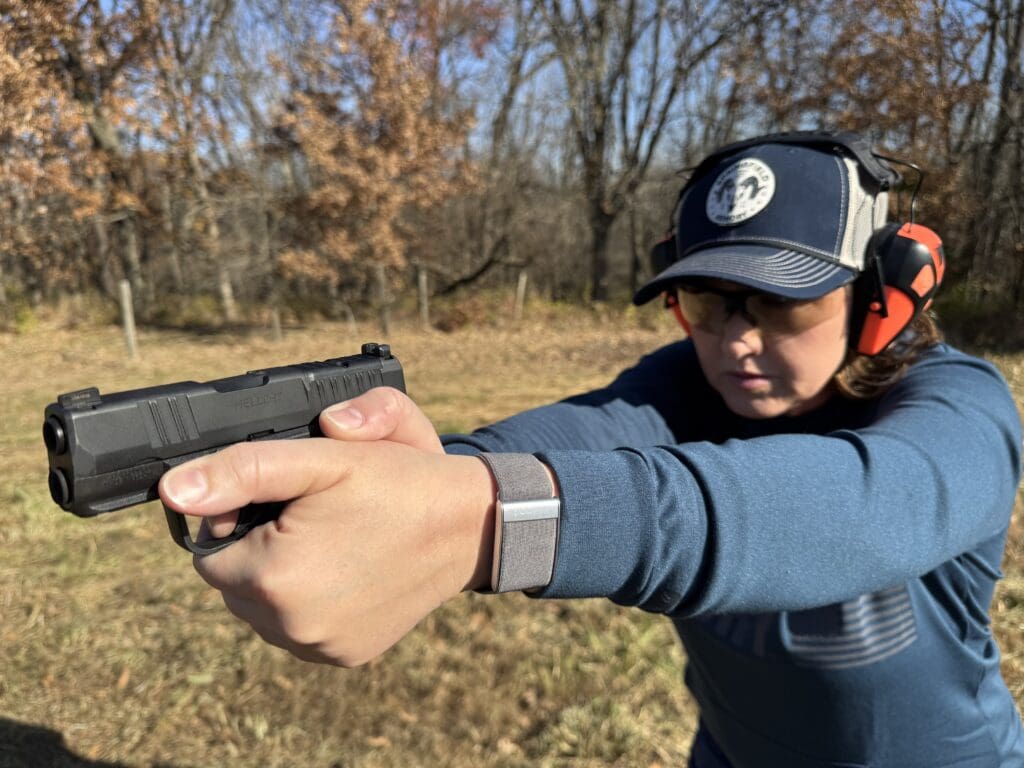
If you’re happy with your accuracy, but find that you struggle maintaining a good grip while shooting with 9mm, .380 can help there, too. The ability to make follow-up shots is important for self-defense. If you find that a 9mm pistol jumps in your hands so much that you have to adjust your grip after every shot, softer shooting .380 may help eliminate that problem.
Accuracy on target, maintaining a consistent grip, and being able to make fast follow-up shots are all measurable. It’s also important to assess how you feel. If you feel much more confident in your ability to shoot and defend yourself with a .380 compared to 9mm, that’s significant.
Can you train to overcome issues with accuracy and recoil control with 9mm? Absolutely. Realistically, you must ask, will you put in the time to improve? Be honest with yourself. Which is more important: carrying a firearm that has greater ballistic potential or one that you can shoot well enough to hit your target with multiple shots if necessary?
The Option is Yours, Choose the Best Caliber For Right Now
Finally, a firearm is an investment. Choosing the best firearm in a specific caliber for you right now will likely change with experience, physical strengths and/or limitations, and shooting skills. You can start with a .380 and move up to 9mm when you feel confident. You can also transition from 9mm to .380, should you need to.
Julie Golob is a Springfield Armory Ambassador, a multi-time world and national shooting champion, an experienced shooting instructor, woman of the outdoors, proud US Army veteran, published author, and two of her most treasured titles are wife and mom.