


















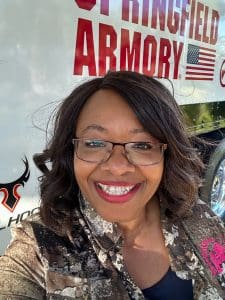





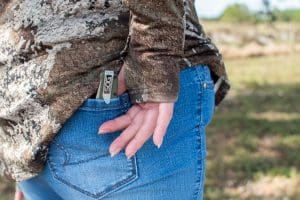


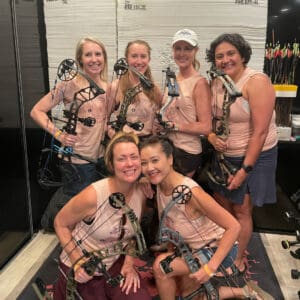


Have you ever found yourself lingering in front of the firearm counter at a sporting goods store or you’ve seen the Shoot Like a Girl truck? You are not alone. Many people begin their firearm journey with nothing more than curiosity. Maybe you have friends who own firearms for personal protection, or you know someone who hunts or competes in shooting sports. Maybe you’ve simply wondered what it would feel like to understand something that so many people talk about, debate, and rely on.
Whatever the reason, curiosity is just the spark.
Confidence — real, grounded, responsible confidence — is something you build. And the path from one to the other is far more approachable than most people realize.
My Journey Begins
My own journey from “I don’t know anything about guns” to becoming a confident firearm owner began in January 2014. My husband had reserved a shooting lane one afternoon, and I decided to tag along. My plan was simply to watch him shoot. That was it — no expectations, no pressure, just curiosity.
But once we were on the range, he turned to me and asked, “Do you want to try?”
I felt nervous, unsure, and a little intimidated. My heart jumped every time I heard a shot fire, but I also felt that spark of curiosity. So, I said, “Yes.”
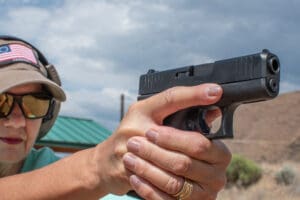
Before I knew it, he was handing me a Glock 19 and showing me how to grip it properly. He walked me through the basics — where to place my hands, how to stand, how to keep the muzzle pointed safely downrange. When I was ready, he had me point the firearm at the target and slowly press the trigger.
Bang! It was loud. It was surprising. It was a little scary. But it was also exhilarating — and I hit the target. I immediately wanted to try again. The biggest realization I had that day was simple but powerful: if I followed the four safety rules, shooting could be enjoyable, empowering, and even fun. That moment was the true beginning of my journey.
Why Safety Comes First — Always
Every confident firearm owner understands one thing: we take safety seriously. Not in a performative way, and not because someone told them to, but because they understand that safety is the foundation of everything else.
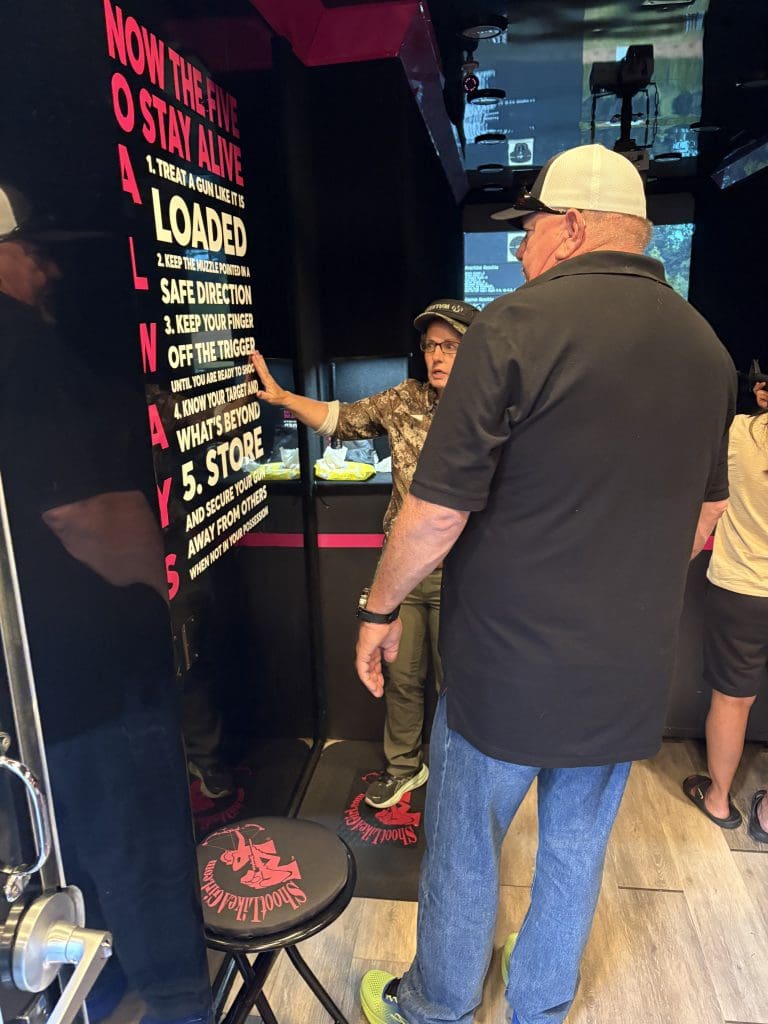
The four universal safety rules are simple, but they are non‑negotiable:
• Treat every firearm as if it’s loaded
• Never point the muzzle at anything you are not willing to destroy
• Keep your finger off the trigger until you are ready to shoot
• Know your target and what’s beyond it
When you are new, these rules feel like a checklist. You run through them consciously, step by step. But over time, they become instinctive. They shape how you move, how you think, and how you handle the firearm.
That shift — from conscious effort to automatic habit — is where confidence begins to take root.
Mastering the Fundamentals of Marksmanship
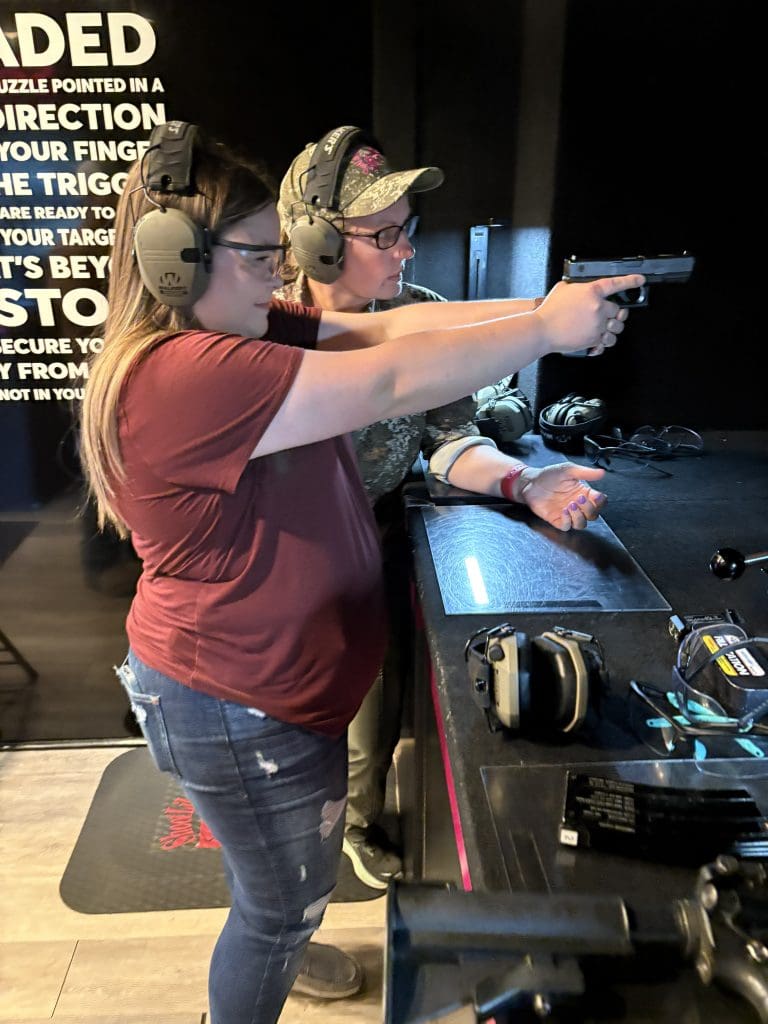
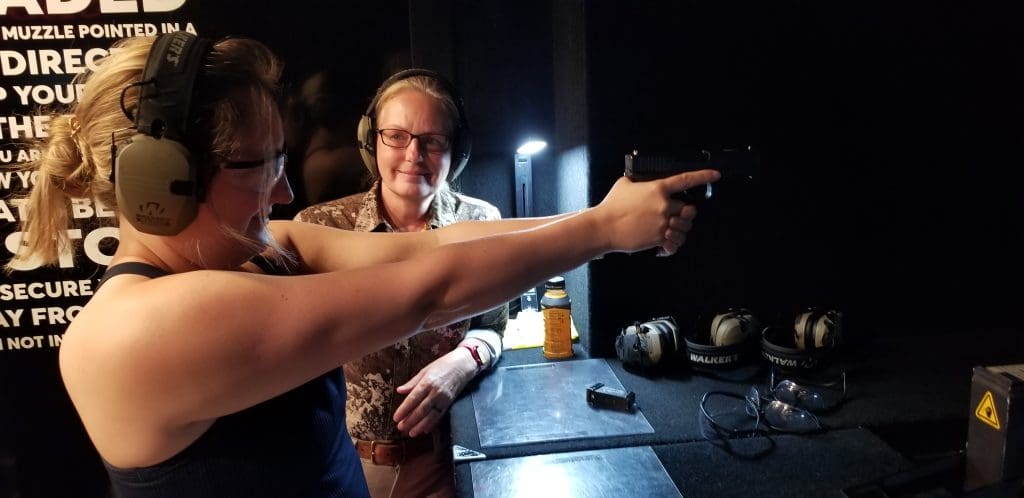
Shooting with a friend or family member is a great introduction, but the best way to build real confidence is through a structured class at your local range. A certified instructor will teach you proper handling, reinforce safety, and walk you through the fundamentals of marksmanship. You will learn range etiquette, as well, which helps you feel more comfortable and confident in the environment.
The fundamentals are the backbone of everything you do with a firearm. They ensure you can manage recoil, maintain control, and shoot accurately. They include:
Stance – A solid stance gives your body the stability it needs to handle recoil without losing balance. Think of it as the foundation of a house — everything else depends on it.
Grip – A proper, firm grip helps you control the firearm and keep your sights aligned with the target. A good grip reduces muzzle rise and helps you recover quickly for follow‑up shots.
Sight Alignment – Correctly aligning the sights ensures your shots land where you intend. Even small misalignments can send rounds off target.
Trigger Control – Once your sights are aligned, shooting becomes a matter of touching the trigger and applying steady pressure until the shot breaks. Smooth, consistent trigger control is one of the biggest factors in accuracy.
Follow‑Through – During recoil, follow‑through allows the firearm to return to its original position. By keeping your finger off the trigger during recoil, you give yourself time to settle your sights and prepare for the next shot.
These fundamentals may seem simple, but mastering them is what separates a nervous beginner from a confident, capable shooter.
Demystifying the Tool
A lot of the fear surrounding firearms comes from not understanding how they work. Once you learn the basics — the parts, the mechanics, the differences between platforms — the mystery fades.
You don’t need to become a gunsmith. You just need enough knowledge to feel grounded:
• How a semi‑automatic pistol cycles
• What “caliber” means
• How ammunition functions
• How to load and unload safely
• How to clear a malfunction
Understanding the mechanics replaces fear with familiarity. It also helps you make informed decisions about what type of firearm fits your needs and comfort level. Enrolling in a class with a certified instructor will help to demystify the firearm.
Consistency Builds Confidence
Skill development takes practice, commitment, and repetition. When you are new, accuracy should always come before speed. Rushing your shots before you’ve built a strong foundation can lead to frustration and bad habits.
Make a commitment to practice regularly. Join a shooting group at your local range or set a schedule that keeps you accountable. Consistency is where confidence grows — not from one great range day, but from many steady, intentional ones.
Dry‑fire practice at home (with a cleared firearm and no ammunition present) is one of the most effective ways to build skill. It reinforces muscle memory, improves trigger control, and builds confidence without the noise or recoil of live fire.
Mentorship Matters
One of the most rewarding parts of my journey has been the people I have met along the way. I’ve made wonderful friends at the range who have encouraged me, challenged me, and helped me grow. My husband and I continue to shoot together regularly, which keeps us both accountable and ensures our skills continue to improve.
Having mentors — whether formal instructors or supportive friends — accelerates your progress and makes the journey far more enjoyable. A good mentor helps you avoid common mistakes, reinforces safe habits, and celebrates your progress with you.
Setting Clear Goals
Remember that spark you felt when you lingered at the counter? Hold onto it. That curiosity is your starting point, and now it’s time to build on it.
Find a local shooting range and sign up for a class. Consider becoming a member — many ranges offer discounts on classes, accessories, and range time. Membership also helps you stay consistent.
Think about what you want to achieve:
• Obtaining your Conceal Carry Permit
• Recreational shooting
• Competition
• General knowledge and confidence
Setting small, achievable milestones helps you track your progress and stay motivated. Maybe your first goal is simply to take a class. Maybe it’s to shoot a tighter group or to feel comfortable loading and unloading without hesitation.
Whatever your goals, write them down in a journal. Celebrate your progress. And remember that confidence grows one step at a time.
Becoming a Responsible, Confident Firearm Owner
Confidence with firearms isn’t about bravado or ego. It’s about competence, clarity, and responsibility. It’s about knowing how to handle a firearm safely, how to store it securely, and how to make thoughtful decisions.
As you grow in skill and knowledge, you will feel more comfortable at the range. You will understand your equipment, and trust your training. You will carry yourself with the quiet confidence that comes from competence.