












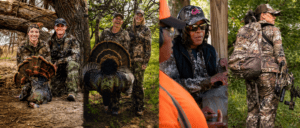
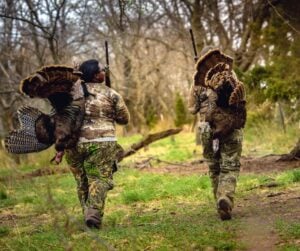











This is YOUR year; the year you will harvest a turkey! Never harvested a turkey before? Not sure where to start? Been turkey hunting, but feel lost in preparing? Can you really do this? Yes, yes you can, and this is the first step to start preparing to check off your turkey hunting bucket list.
There is a distinct, woodsy, robust smell that reminds me it’s turkey season! I remember one early morning, our goal was to get to my location by 5:30 a.m., before the sun came up, so I could get settled and quiet before the turkeys woke up. I’m not gonna lie, it seemed like every step I took was louder than the last one! Crunch, crunch, in my mind, repeating “Kelly, slow, slow, walk gently, light-footed steps! They can hear everything!” The thrill of walking out to your spot before dark is one that hunters relish, no matter what season; the unknown of the day, and just the comfort of being surrounded by the woods, wildlife, and the potential of what could happen!
Let’s go over a scouting checklist that will help you create your turkey hunting stories and get you prepared for future turkey hunting expeditions! You will learn to look, listen, locate, search, and rest. These steps will help you move towards harvesting your turkey, whether it be your first or 10th! We can always learn to become more efficient and strategic in our hunting endeavors.
Look: Use Aerial Maps to Find Turkey Habitat
When you’re trying to find turkeys in the spring, let your eyes do the work—starting with tools like Google Earth or the mapping apps on your phone to spot places turkeys are likely to use. As you scan aerial photos and maps, look for creek and river bottoms, field edges, meadows near creeks, open fence lines, and flat areas without thick vegetation.

Listen: Let Your Ears Guide You to Gobblers
As spring gets closer, get outside and let your ears do the work. Pay attention to when and where gobblers are sounding off and warming up their vocal cords. Warm, low-wind days are especially good for hearing loud, talkative longbeards, which can clue you in on where birds like to hang out. Remember that turkeys can detect sounds from a mile away with the exact location of the source.
Locate: Find the Roost and Feeding Areas
When you’re trying to pin down roost spots, check creek bottoms and low areas with big, mature hardwoods. You might spot a loose wing feather from where birds fly up or down each day, or breast feathers that drifted down. And yeah—keep an eye out for droppings on the ground beneath a roost tree. That’s usually a dead giveaway.
Once you figure out where birds are spending the night—which can change day to day—the next step is finding their “chow hall,” or where they’re feeding during the day.
Search: Read the Signs on the Ground
In this step, you’re basically looking for signs on the ground—tracks, droppings, loose feathers, and even strut marks where gobblers have been pacing back and forth, showing off for the hens.
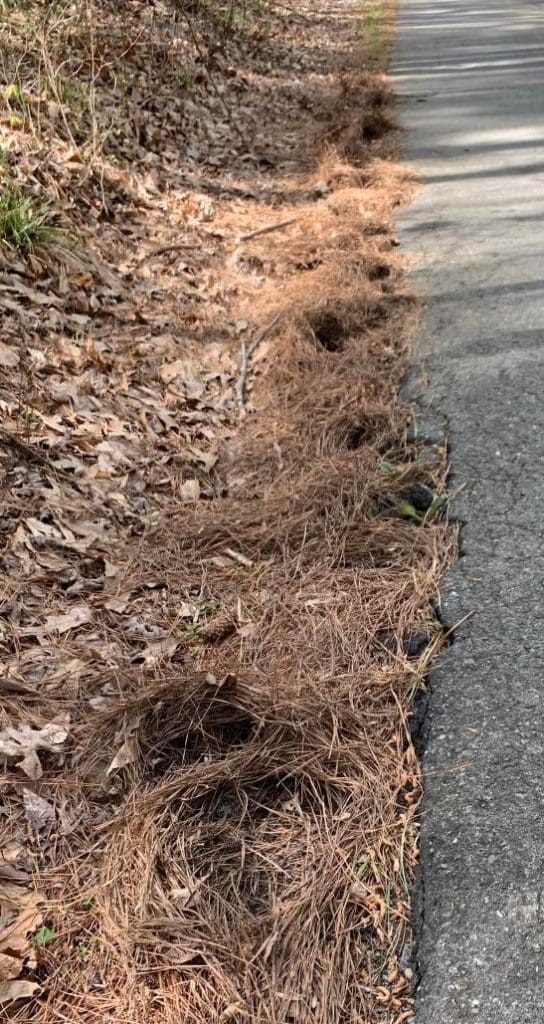
Check game trails and dirt roads. You’re trying to see where the tracks are, where the birds come from, and where they’re headed. I have learned that it’s way easier to spot signs after a good rain. Pine straw makes it easy to spot their scratch marks.
Rest: The Evening Before Your Hunt
It’s the day before you plan on hunting, so head to your hunting spot during the last hour or so of daylight and set up where you can hear a gobbler when he flies up into the tree for the night.
You’ll usually hear birds getting a little noisy as they move through the woods toward their roost before fly-up. And if you’re close enough, you might even hear the rush of wings—seriously, it gets your adrenaline going!
Once they settle in, an old gobbler usually can’t help himself—he’ll often let out a gobble or two as night starts to set in.
What People Don’t Tell You About Turkey Hunting
Only you know your weaknesses. I have a heavy step when I walk, and that is something I needed to be aware of! Learn your weaknesses and know what you can improve on. Don’t underestimate the intelligence of the turkey. This is a different type of hunting that requires a lot of planning and knowledge of what you are harvesting!

Fun Turkey Facts
- An adult turkey has an average of 6,000 feathers.
- Hens can strut, too.
- Young turkeys, called poults, scarf down insects like candy.
- Turkeys can run 18 mph on foot and 50 mph in flight.
Turkey Joke of the Day
Why did the turkey join the band? Because it had the drumsticks!